


India’s power transmission market is increasingly shaped by two simultaneous requirements: higher voltage infrastructure and faster project execution.
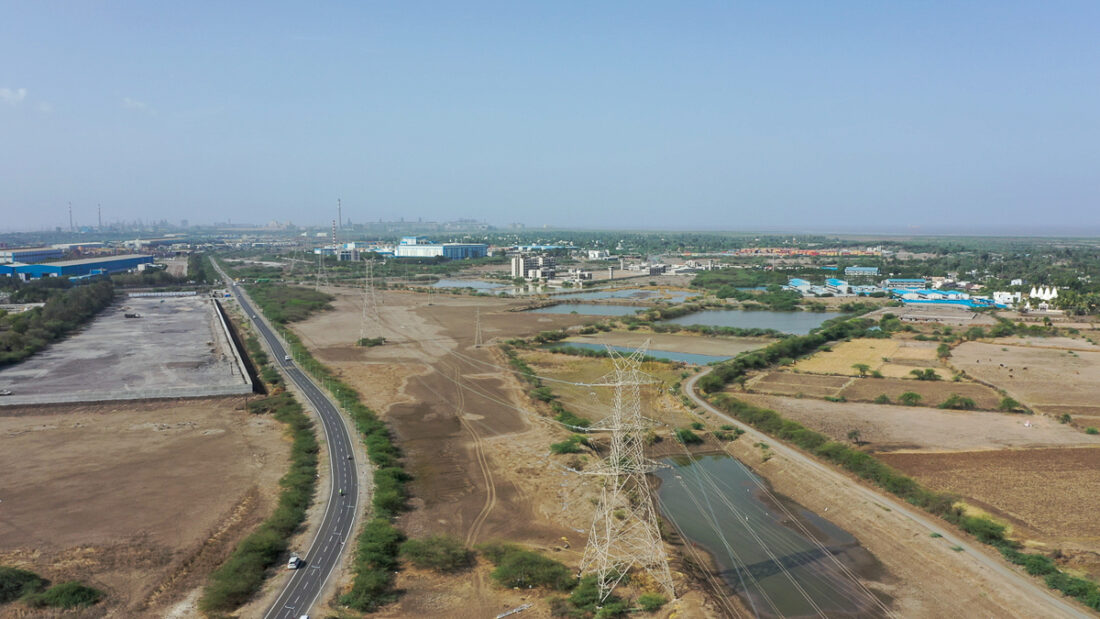
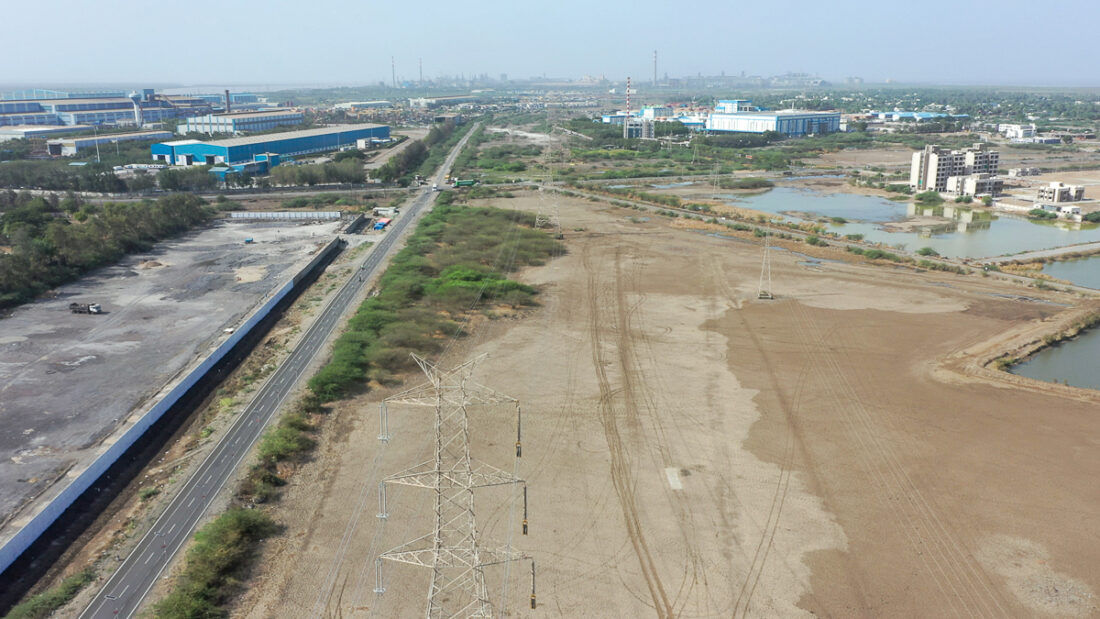
A recent 400 kV overhead line project near Surat, in the state of Gujarat, illustrates this shift. The line, approximately 40 km long, was designed to support the electricity supply of the ArcelorMittal Nippon Steel India industrial and port facilities in the Hazira area.
This project was significant for two reason, first, it confirms the relevance of composite core conductors like HVCRC® for 400 kV applications in India, a voltage level that is central to the country’s transmission expansion. Second, it shows how compressed delivery schedules can be achieved when the full industrial chain is aligned, from composite core production to conductor stranding and line installation.
A 400 kV reference in a demanding market
In India, 400 kV transmission lines are a key part of the high-voltage backbone required to support industrial growth, renewable evacuation and inter-state power flows. For private industrial consumers, the issue is not only grid capacity, but also the reliability and timing of the connection.
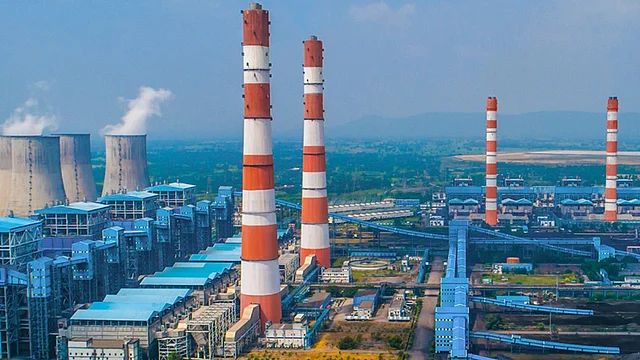
The Surat project falls directly within this context. It supports the power supply of the ArcelorMittal Nippon Steel India (AMNS India) facilities in the Hazira area, near Surat. This industrial complex is one of the largest integrated steel production sites in India, combining steelmaking operations with port infrastructure to handle raw materials and finished products. Its continuous and energy-intensive processes require a stable and high-capacity electricity supply, making transmission reliability a critical factor.
Supplying a steel plant and port complex of this scale requires a transmission solution that meets electrical and mechanical requirements while adhering to project timelines. At this voltage level, delays in production, logistics, stranding or installation can impact the commissioning schedule.
From pultrusion in France to installation in India in just 3 months
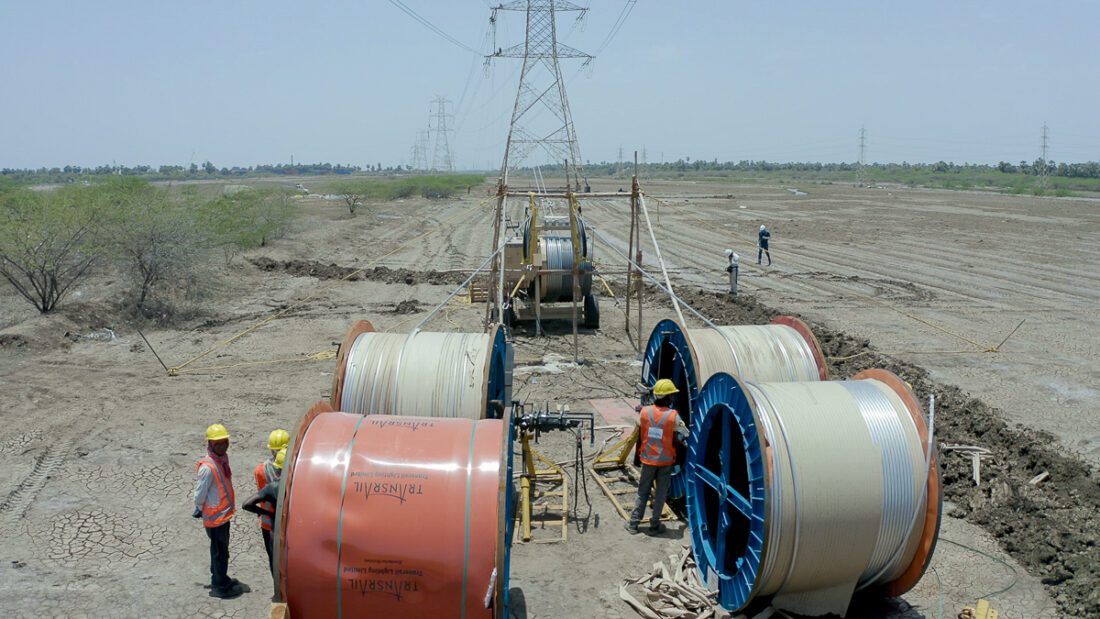
The execution timeline is a defining feature of this project. The carbon composite core was pultruded in our Epsilon Cable factory in France starting in February, then shipped to India, where it was stranded into overhead conductors and installed on site as early as May. In only a few months, the project moved from composite core production to field installation.
This sequence required close coordination between Epsilon Cable, Transrail as stranding and installation partner, and Legion Energy for line accessories, ensuring alignment across production, stranding and installation.
For 400 kV transmission projects, execution time is a critical parameter. These lines are often linked to industrial loads, generation evacuation, substations or network reinforcements where delays can have direct economic consequences. This project provides a concrete example of how production, stranding and installation can be executed within a short project window, combining high-voltage performance with fast deployment.
Installation challenges
The installation phase also demonstrated the project team’s ability to operate under difficult field conditions. Several sections of the line crossed areas affected by recent flooding, with standing water still present in parts of the work zone. The proximity of dense vegetation, unstable ground conditions and limited site accessibility added further complexity to the installation sequence.
These constraints required close coordination between the teams responsible for logistics, accessories and line installation. Despite these conditions, the project is progressing according to schedule, confirming the importance of execution planning in 400 kV projects where technical performance and deployment speed must be managed together.
This 400 kV project illustrates how composite core conductor technology can be integrated into local project execution models, with Indian partners handling key downstream steps such as conductor stranding, accessories and installation.