


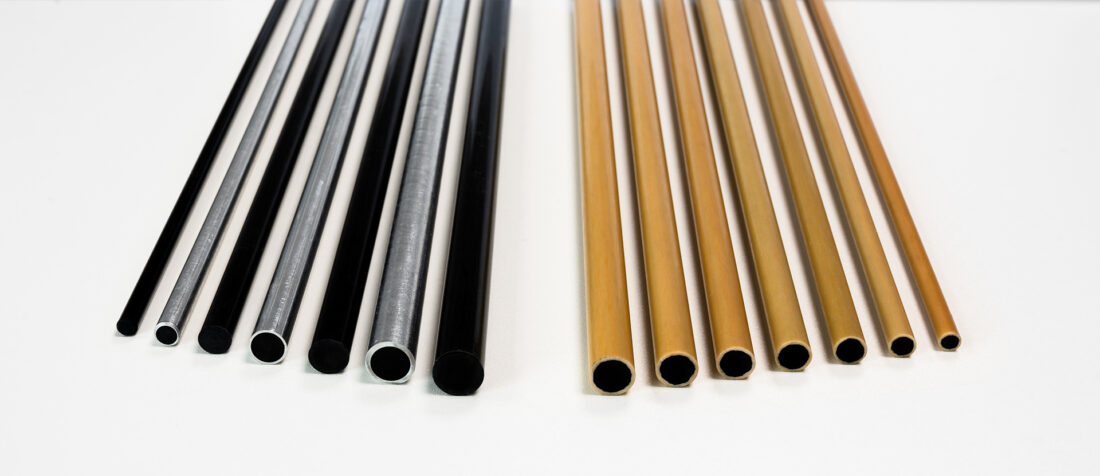
Epsilon Cable designs and manufactures carbon fiber composite cores for advanced overhead conductors, replacing the conventional steel cores used in ACSR or ACSS conductors. These composite cores enable conductor designs that can increase current-carrying capacity, reduce thermal sag and improve the long-term performance of transmission and distribution lines.
Epsilon Cable designs and supplies a full range of carbon fiber composite cores for advanced conductors, including hybrid carbon-glass cores used in HVCRC® and HVCRC LITE conductors, or full carbon fiber cores used in partner conductor technologies.
Unlike manufacturers that focus on a specific architecture, Epsilon Cable can therefore offer the most suitable technology depending on the technical constraints of each project: high-temperature operation, ultra-low sag, heavy ice load areas, wide crossings, cost-optimized low-sag conductors or customer-specific conductor designs.
40 years
carbon fiber pultrusion experience
10 000+ km
10 000+ km of conductors installed using Epsilon composite cores
25+ countries
Large-scale deployment across all continents
Multiple technologies
Hybrid carbon-glass, Ultra Low Sag, LITE, full carbon cladded, CORECHECK®…
Discuss your composite core project with our advanced conductors experts.
What is a composite conductor core?
A composite conductor core is the load-bearing element located at the center of an overhead conductor. It carries the mechanical load of the conductor while the surrounding aluminum strands carry the electrical current.
In conventional conductors, this central load-bearing element is generally made of steel, as in ACSR and ACSS conductors. In advanced conductors, the steel core is replaced by a carbon fiber composite core, designed to provide a higher strength-to-weight ratio, much lower thermal expansion and better long-term dimensional stability.
The composite core is the central structural technology that determines the mechanical behavior of the conductor, especially under tension and temperature. Different conductor technologies can therefore be built around different composite core architectures.
Carbon fiber, glass fiber and epoxy matrix architecture
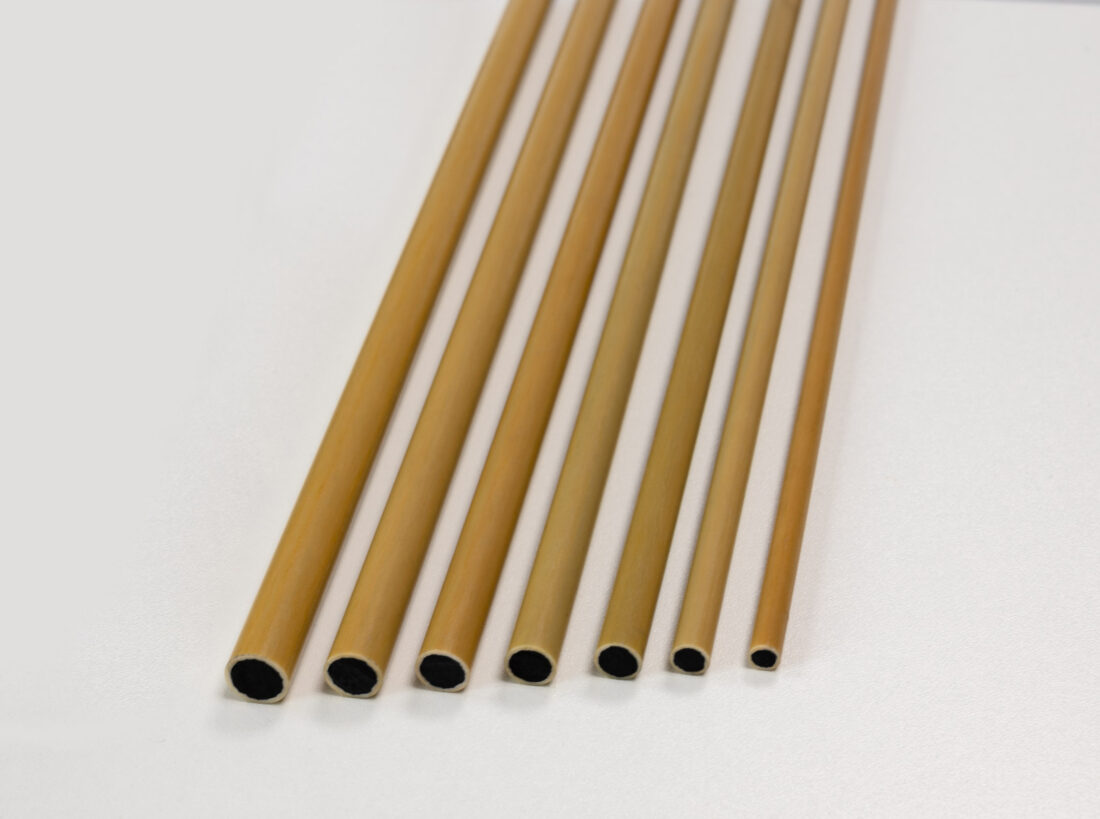
Composite conductor cores are engineered using controlled fiber architecture and thermoset resin systems. Depending on the required performance, Epsilon Cable can supply:
- hybrid carbon-glass composite cores (HVCRC technology)
- extra high strength hybrid cores (HVCRC ULS or “Ultra Low Sag”)
- cost-optimized hybrid cores (HVCRC LITE)
- full carbon fiber composite cores, with aluminum cladding.
The core architecture is selected to balance tensile strength, axial stiffness, thermal expansion, bending behavior, galvanic corrosion protection, ageing resistance and project cost.
This engineering approach allows us to propose the most appropriate composite core technology for each conductor design and grid constraint.
Why are carbon fiber composite cores used in advanced conductors?
Composite cores are used because conventional overhead conductors are increasingly limited by thermal sag, mechanical elongation, ageing and corrosion constraints.
They directly contribute to grid operators’ objective to carry more current in a short time-frame while preserving clearances, controlling losses, limiting structural modifications and maintaining long-term reliability.
Low thermal expansion and sag control
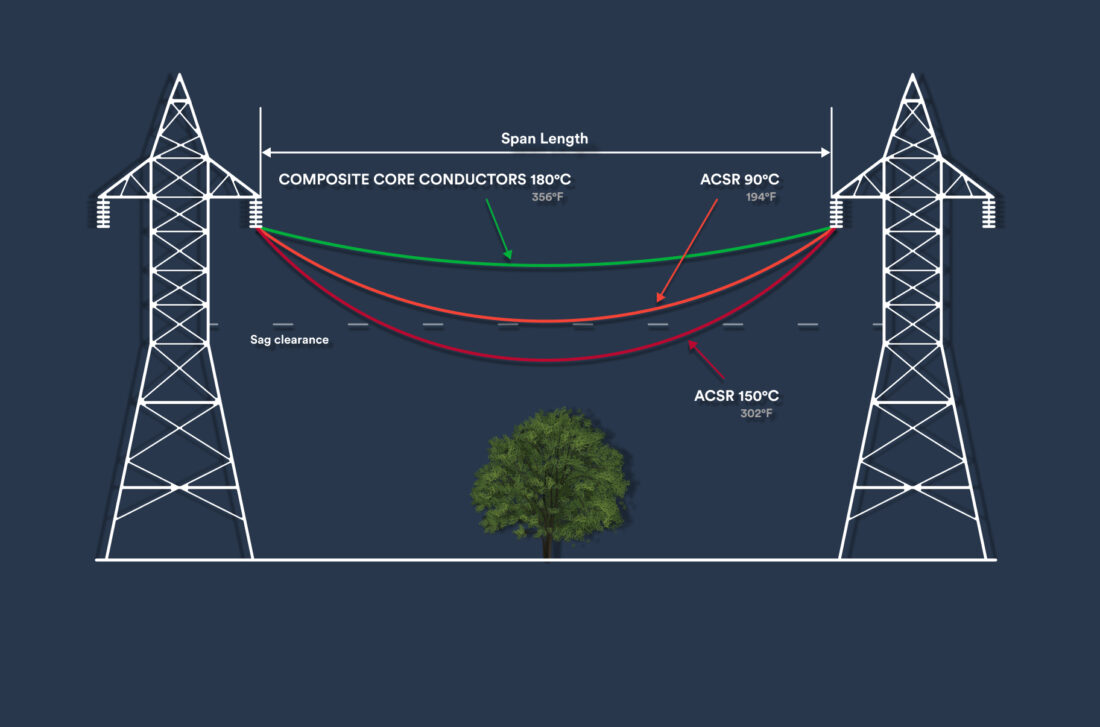
One of he most important properties of carbon fiber composite cores is their extremely low coefficient of thermal expansion.
Epsilon composite cores typically range from 0.2 x 10⁻⁶ /°C to 1.3 x 10⁻⁶ /°C, depending on the core architecture.
By comparison, conventional ACSR conductors exhibit an effective thermal expansion of approximately 11.5 × 10⁻⁶/°C, due to the combined behavior of steel and aluminum.
This order-of-magnitude difference directly reduces thermal sag at high operating temperatures. It also improves clearance control, which is critical for line uprating, reconductoring and operation in constrained corridors.
More aluminum for higher electrical performance
Carbon fiber composite cores have a much lower density than steel cores while providing high tensile strength. This allows advanced conductors to use a higher proportion of conductive aluminum for a given conductor diameter and weight.
In conductor designs such as HVCRC, this can be combined with additional optimizations such as trapezoidal aluminum strands providing a higher fill factor, and annealed aluminum offering a higher conductivity.
The result is a conductor design that can increase ampacity while reducing electrical losses compared with conventional conductors of similar diameter and weight.
Long-term dimensional stability
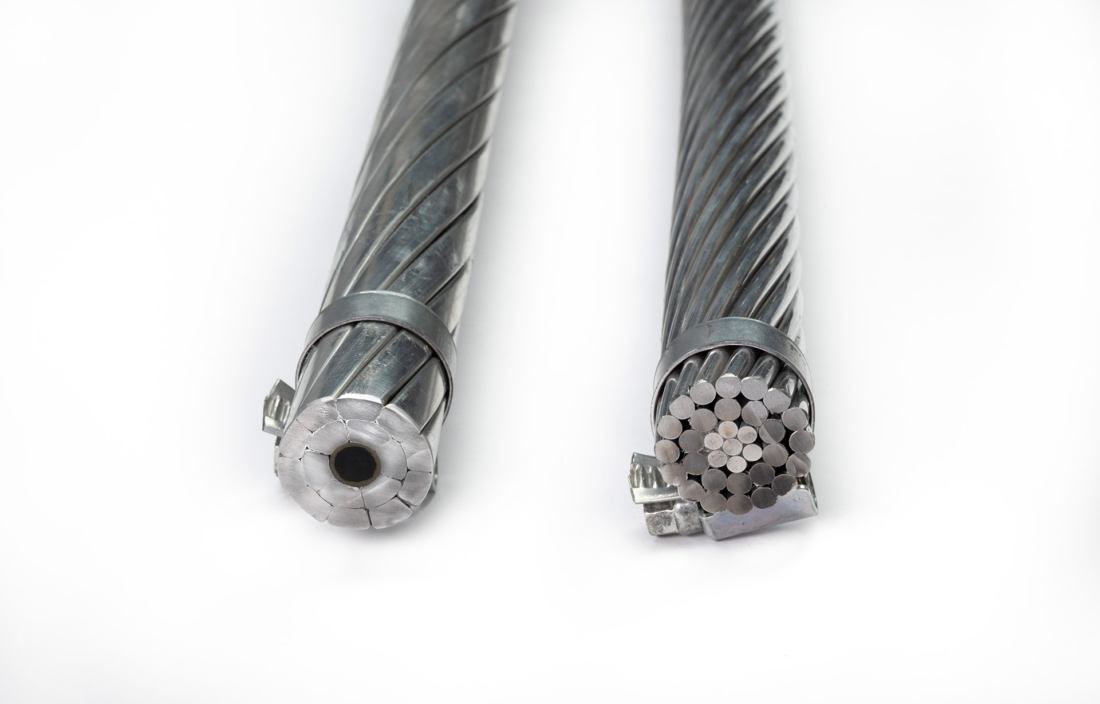
Metallic cores can suffer from cumulative elongation and irreversible deformation under repeated mechanical and thermal loading.
Composite cores are engineered to limit long-term creep and preserve conductor geometry over time. This is critical for maintaining sag-tension performance throughout the service life of the line.
Stable geometry also supports more predictable line modelling, especially for reconductoring projects where existing structures and clearances must be preserved.
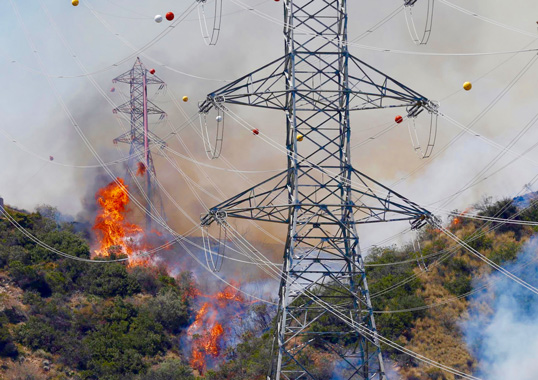
Risk mitigation: clearances, corrosion and wildfire exposure
Sag control is not only a capacity issue. It is also a safety and reliability issue.
By limiting thermal elongation, composite cores help reduce the risk of excessive sag and clearance loss. This is particularly relevant in:
- vegetation-dense corridors
- high-temperature operating conditions
- wildfire-prone areas
- lines exposed to repeated load peaks
Composite cores also require a properly designed galvanic corrosion protection system, because carbon fibers are electrically conductive and must be isolated from aluminum in the presence of moisture or electrolytes.
Composite cores vs conventional steel cores
| Feature | Conventional steel core used in ACSR | Carbon fiber composite core |
| Core density | High | Low |
| Thermal expansion / CTE | 11.5 x 10⁻⁶ /°C | ~0.2-1.3 x 10⁻⁶ /°C |
| Sag at high temperature | High | Very low |
| Long-term creep | Significant | Minimal |
| Maximum operating temperature | Typically 75-90°C in ACSR | Up to 180-200°C for high-temperature composite core designs |
| Integrity verification | Visual and mechanical inspection | Dedicated composite core inspection methods such as CORECHECK® |
| Typical use | Legacy technology developed in the early 1900’s, and still widely used for greenfield lines | Reconductoring to increase ampacity, reduce losses, mitigate sag issues, or reduce construction costs on greenfield projects |
Epsilon Cable composite core range
Epsilon Cable supplies a complete range of composite cores for advanced conductors. This range covers multiple conductor architectures and performance requirements, from high-temperature reconductoring to ultra-low-sag applications and cost-optimized low-sag conductors.
Hybrid carbon-glass composite cores for HVCRC conductors
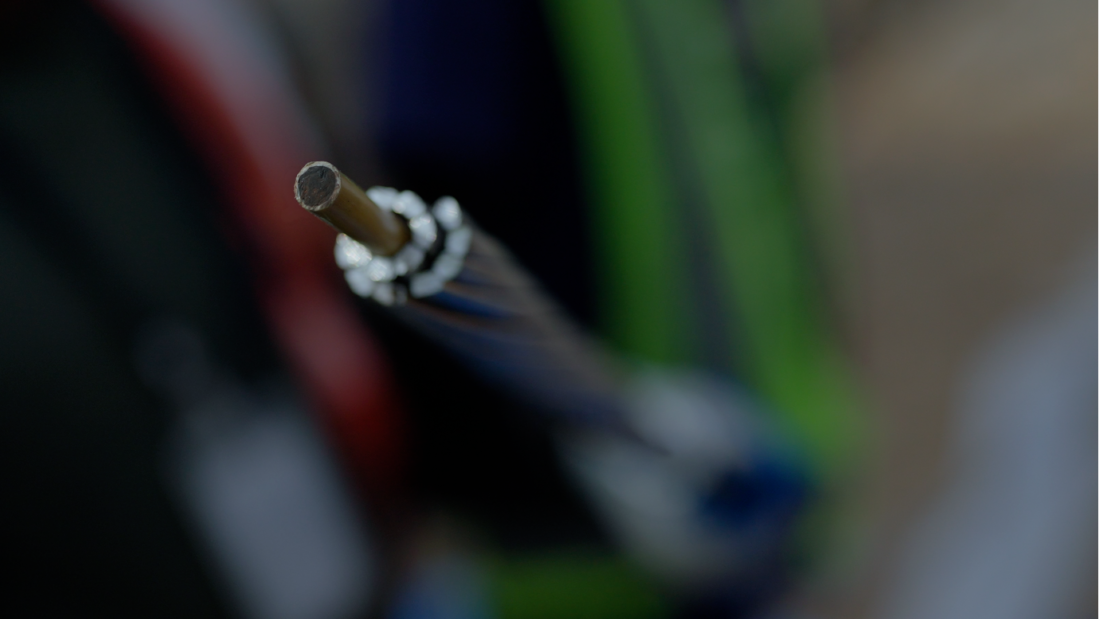
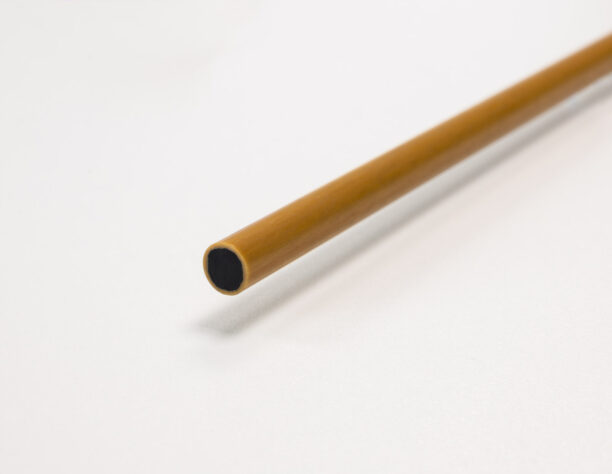
HVCRC is Epsilon Cable’s main composite core conductor technology. It is based on a proprietary hybrid carbon-glass composite core architecture designed to balance strength, flexibility, thermal stability and galvanic corrosion protection.
The HVCRC core is made from:
- high-strength carbon fibers
- boron-free glass fibers, forming an integrated outer layer for galvanic corrosion protection
- high-temperature epoxy matrix
The HVCRC range covers common core diameters used in advanced conductors, typically from Ø4 mm to Ø12 mm, with several performance grades.
HVCRC conductors are designed for high-capacity and high-temperature operation, with continuous operation up to 180°C and emergency operation up to 200°C, depending on conductor design and project requirements.
| HVCRC® composite cores | |||||
|---|---|---|---|---|---|
| Ø [mm] | Tensile strength | Tensile modulus [GPa] | CTE [10⁻⁶] | Linear weight [g/m] | |
| Minimum [MPa] | Minimum [kN] | ||||
| Ø 4.78 | 2137 | 38 | 112 | 1.6 | 34 |
| Ø 5.97 | 60 | 53 | |||
| Ø 7.11 | 2250 | 89 | 123 | 1.3 | 74 |
| Ø 7.75 | 106 | 87 | |||
| Ø 8.13 | 117 | 96 | |||
| Ø 8.76 | 136 | 112 | |||
| Ø 9.53 | 160 | 132 | |||
| Ø 9.78 | 169 | 139 | |||
| Ø 10.03 | 178 | 146 | |||
| Ø 10.54 | 196 | 162 | |||
* The values indicated in this table are provided for information purposes only and do not constitute a contractual commitment.
HVCRC ULS cores for ultra-low-sag applications

HVCRC ULS is the Ultra-Low-Sag version of the HVCRC composite core technology. It is designed using higher-grade carbon fibers, for projects where an even higher stiffness and sag control are required.
Typical use cases include:
- long spans
- river or valley crossings
- heavy ice load areas
- projects with strict clearance constraints
| HVCRC® ULS composite cores | ||||||
|---|---|---|---|---|---|---|
| Ø [mm] | Tensile strength | Tensile modulus [GPa] | CTE [10⁻⁶] | Linear weight [g/m] | ||
| Minimum [MPa] | Minimum [kN] | |||||
| Ø 8.76 | 2586 | 156 | 146 | 0.75 | 111 | |
| Ø 9.53 | 185 | 131 | ||||
| Ø 9.78 | 194 | 138 | ||||
| Ø 10.03 | 204 | 145 | ||||
| Ø 10.54 | 226 | 161 | ||||
* The values indicated in this table are provided for information purposes only and do not constitute a contractual commitment.
HVCRC LITE cores for cost-optimized low-sag conductors
HVCRC LITE is designed for projects where very high operating temperatures are not required, but where low sag, lower losses and CAPEX optimization remain important.
Unlike conventional HTLS conductors, HVCRC® LITE uses a standard-temperature matrix. This makes it suitable for conductor designs where the objective is not to operate continuously at 180°C, but to achieve the optimal balance between conductor and project cost, sag performance and electrical losses.
Typical use cases include both reconductoring and greenfield projects.
| HVCRC® Lite composite cores | |||||
|---|---|---|---|---|---|
| Ø [mm] | Tensile strength | Tensile modulus [GPa] | CTE [10⁻⁶] | Linear weight [g/m] | |
| Minimum [MPa] | Minimum [kN] | ||||
| Ø 4.78 | 2137 | 38 | Average 112 | 1.6 | 34 |
| Ø 5.97 | 60 | 53 | |||
| Ø 6.63 | 74 | 65 | |||
| Ø 7.11 | 85 | 75 | |||
| Ø 7.75 | 101 | 89 | |||
| Ø 8.13 | 111 | 98 | |||
| Ø 8.76 | 129 | 113 | |||
| Ø 9.53 | 153 | 134 | |||
| Ø 9.78 | 161 | 141 | |||
| Ø 10.03 | 169 | 159 | |||
| Ø 10.54 | 187 | 164 | |||
* The values indicated in this table are provided for information purposes only and do not constitute a contractual commitment.
Full carbon fiber cores with aluminum cladding
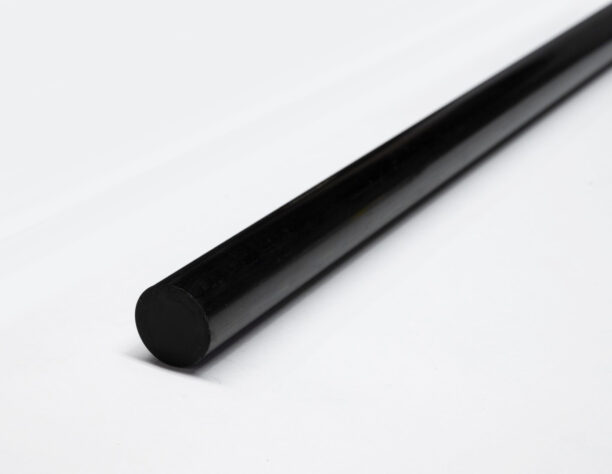
Epsilon Cable also supplies full carbon fiber composite cores for advanced conductor technologies developed by stranding partners.
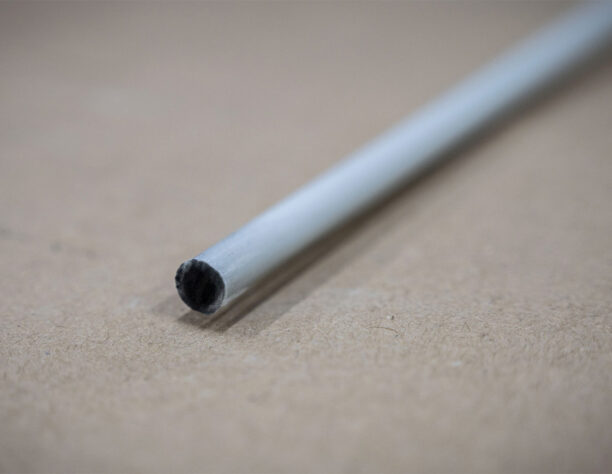
Unlike HVCRC hybrid carbon-glass cores, full carbon fiber cores require an aluminum tube or aluminum cladding to provide galvanic corrosion protection between the carbon fibers and the aluminum conductor strands.
Full carbon fiber cores offer:
- higher stiffness
- high tensile strength
- minimal elongation
- strong performance in demanding mechanical configurations
They are particularly suited for very long spans and heavy ice load regions.
| 100% carbon fiber cores | |||||
|---|---|---|---|---|---|
| Ø [mm] | Tensile strength | Tensile modulus [GPa] | CTE [10⁻⁶] | Linear weight [g/m] | |
| Minimum [MPa] | Minimum [kN] | ||||
| Ø 5.95 | ≥ 2 250 Average 2 500 | 63 | 150 | 0.1 | 45 |
| Ø 7.08 | 89 | 64 | |||
| Ø 8.10 | 116 | 83 | |||
| Ø 8.5 | 128 | 92 | |||
| Ø 9.5 | 160 | 115 | |||
| Ø 10.53 | 196 | 140 | |||
* The values indicated in this table are provided for information purposes only and do not constitute a contractual commitment.
This diversity of options lets utilities, EPCs and conductor manufacturers select the most appropriate architecture for their technical requirements.
Galvanic corrosion protection: a critical design requirement
Composite materials themselves do not corrode like metals. However, carbon fibers are electrically conductive.
If carbon fibers are placed in direct contact with aluminum strands in the presence of water or another electrolyte, galvanic corrosion can occur. For this reason, carbon fiber composite cores used in overhead conductors must include a durable corrosion protection system.
Integrated glass fiber barrier for hybrid cores
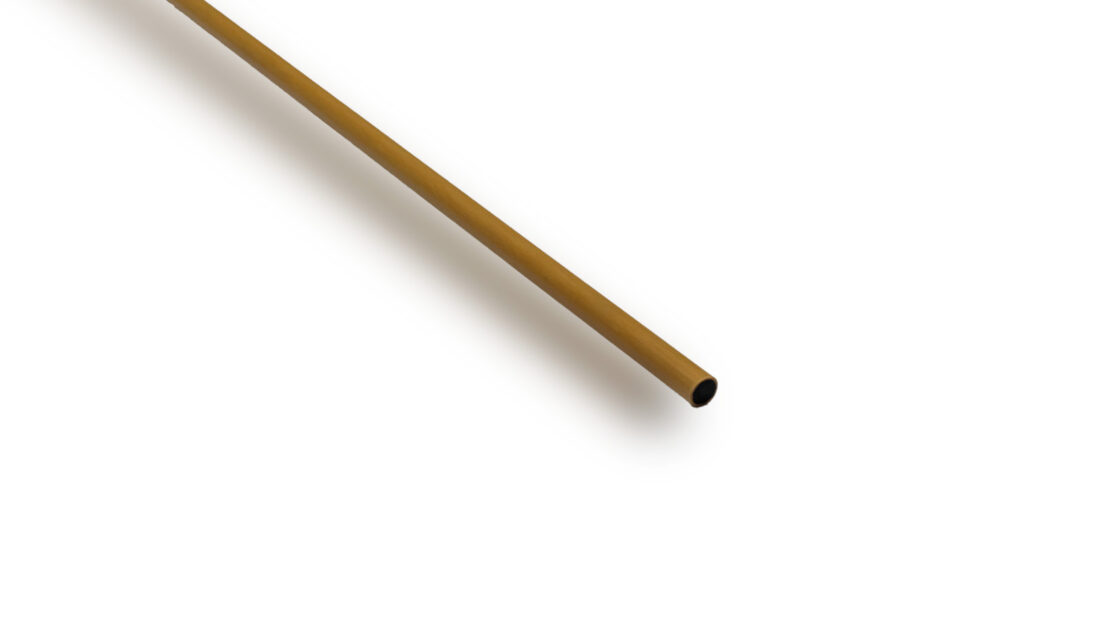
In HVCRC hybrid carbon-glass cores, the galvanic corrosion barrier is directly integrated during the pultrusion process.
The outer glass fiber improves the toughness and flexibility of the core while providing a galvanic corrosion protection layer, isolating the carbon fiber core from the aluminum strands without requiring a separate aluminum tubing operation. This robust, industrially efficient architecture is the main reason why hybrid carbon-glass cores have seen large-scale deployment since the late 2000s.
In addition, their architecture also natively enables dielectric testing such as CORECHECK, to verify the integrity of the composite core in a simple and effective way.
Aluminum cladding for full carbon cores
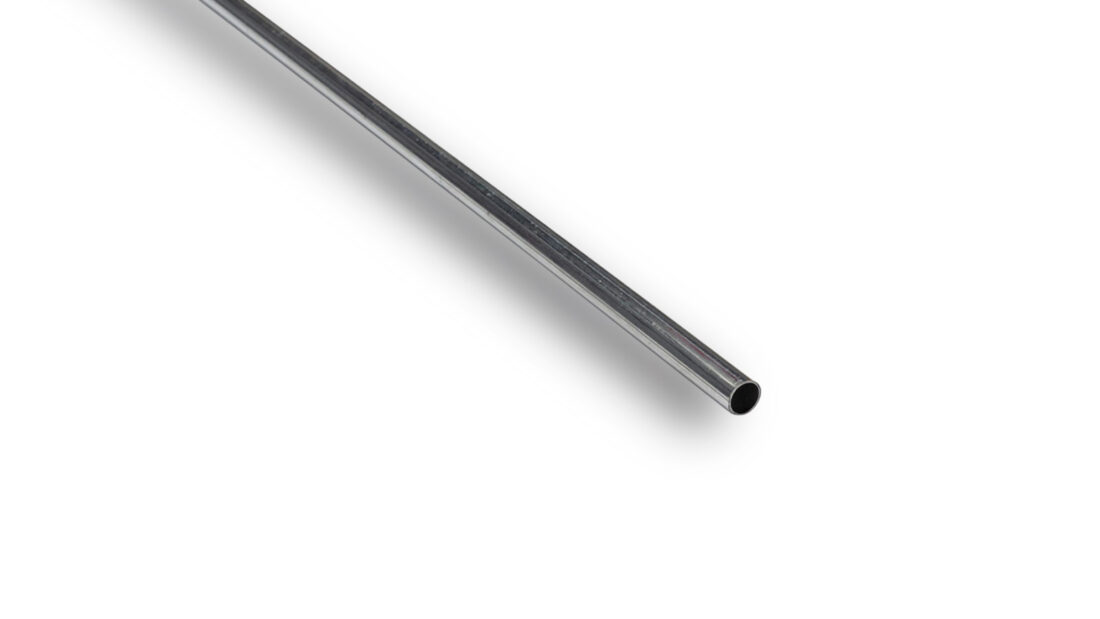
Full carbon fiber cores use a different approach. Because the core is made entirely of carbon fiber, galvanic corrosion protection is provided by an aluminum cladding around the composite core, which can be either extruded or welded depending on the manufacturer.
This solution is technically proven and offers high mechanical performance, but it involves additional manufacturing steps and thermal limitations (generally at 160°C). It is therefore more complex from an industrial perspective and less versatile than a hybrid carbon-glass architecture with an integrated glass fiber barrier.
Both approaches are proven and widely used in the field, so the right choice depends on the conductor design, mechanical requirements, industrial constraints and utility specifications.
Pultrusion manufacturing and process control
Pultrusion is the core manufacturing process used by Epsilon Composite to produce high-performance composite cores for advanced conductors.
It is a continuous process in which fibers are impregnated with resin, aligned, cured and pulled through a heated die to create a composite profile with a constant cross-section.
For conductor cores, pultrusion is particularly relevant because it enables the production of long continuous lengths of composite cores (up to 10 km), with controlled fiber alignment, high fiber volume content, stable cross-sections and repeatable mechanical properties at an industrial scale.
Epsilon manufactures its composite cores in its pultrusion factory in France, with standard core diameters from 3 mm to 30 mm, depending on product configuration.
Controlled fiber architecture
The mechanical performance of a composite core depends heavily on fiber architecture.
Epsilon adjusts the carbon fiber grade, glass fiber configuration, fiber volume ratio, resin system, curing profile and surface protection according to the required mechanical, thermal and ageing performance
This level of control is essential for advanced conductor applications, where the core must combine high tensile performance, low thermal expansion and long-term reliability.
Resin systems and high-temperature performance
The resin matrix plays a critical role in the long-term performance of the composite core.
Epsilon uses specific proprietary epoxy systems selected according to the required conductor rating, with 2 classes of performance:
- a high-temperature epoxy matrix for HTLS conductors, where the matrix must remain stable for decades under continuous extreme thermal exposure and repeated temperature cycles.
- a standard-temperature epoxy matrix for LITE conductors, where sag mitigation and cost optimization are more important than high-temperature operation
Epsilon’s manufacturing process is supported by a dedicated control plan covering dimensional, mechanical, thermal and surface requirements, with full production traceability.
Qualification, standards and industry contribution
Composite cores for overhead conductors must be designed, tested and qualified according to demanding utility requirements and international reference documents.
Epsilon actively contributes to ASTM (American Society for Testing and Materials), IEC (International Electrotechnical Commission) CIGRE (International Council on Large Electric Systems), IEEE (Institute of Electrical and Electronics Engineers) and NEMA (National Electrical Manufacturers Association) committees to shape standards and best practices.
Relevant references include:
- ASTM B987/B987M – Standard Specification for Carbon Fiber Thermoset Polymer Matrix Composite Core (CFC) for use in Overhead Electrical Conductors
- IEC TS 62818-1:2024 – Conductors for overhead lines – Fiber reinforced composite core used as supporting member material – Part 1: Polymeric matrix composite cores
- CIGRE B2.94 – Working Group on inspection after installation, maintenance and end of life of high temperature conductors and fittings
This involvement ensures that Epsilon’s core technologies remain aligned with the latest technical expectations from utilities, conductor manufacturers and the wider power transmission industry.
Type tests & qualification
Type tests are performed on composite cores to validate their design before deployment to verify that they can maintain their mechanical and thermal performance over the expected service life of the line.
Standards such as ASTM B987 provide a reference framework for carbon fiber thermoset polymer matrix composite cores used in overhead electrical conductors. They cover requirements for tensile testing, glass transition temperature testing, bending tests, heat exposure testing and heat/stress testing.
These tests are used to verify core properties before integration into conductor designs.
For complete conductor qualification, additional type tests on the conductor and fittings are usually performed.
Production tests, traceability and quality assurance
Beyond type tests, composite cores must also be monitored during serial production to ensure consistency from one batch to another.
Epsilon’s composite and conductor experts support customers in defining and implementing the appropriate qualification program for each conductor technology and project requirement. Utility-specific tests can also be performed on request.
Epsilon is ISO 9001 certified and organized to meet all quality requirements from conductor manufacturers, EPC contractors and utilities.
Composite core integrity verification with CORECHECK
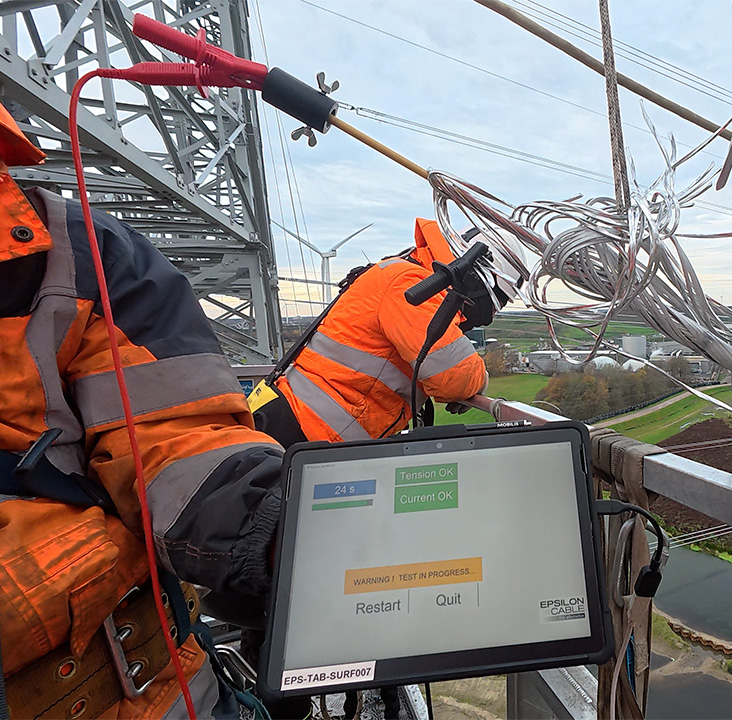
CORECHECK® is Epsilon Cable’s dedicated method for verifying the integrity of composite cores.
It is based on a controlled breakdown voltage test that uses the insulating properties of the glass fiber layer surrounding the carbon core to assess the composite’s integrity.
This makes it possible to detect defects or damage that are often invisible from the outside, including manufacturing defects, cracks, fiber breakage, delamination, as well as handling or installation-related damage.
Verification throughout the project lifecycle
CORECHECK can be used at all stages of a project:
- after pultrusion
- after conductor stranding
- on-site before stringing
- after installation
- during maintenance
- after extreme events
Each test typically takes only a few minutes and can be performed by a trained operator.
Installation considerations for composite core conductors
Composite core conductors can be installed using methods similar to conventional overhead conductors, but they require specific handling precautions.
Unlike steel cores, composite cores are not ductile, so their mechanical integrity must be preserved composite cores are not ductile, so their mechanical integrity must be preserved by following defined installation practices.
In addition, advanced conductors generally use annealed aluminum strands, which are softer than hard aluminum and more prone to being damaged when placed on the ground or in contact with hard objects.
Key precautions include training installation crews before the project to ensure that the minimum bending radius is respected and localized stresses on the core are avoided. This is why it is crucial to follow recommended stringing procedures, including using appropriate sheaves or bullwheel tensioners.

For every project involving its composite cores, Epsilon Cable provides a comprehensive installation guide, training and field support to help conductor manufacturers, EPC contractors and utilities deploy composite core conductors safely.
We provide a comprehensive installation guide for HVCRC conductors, covering:
- handling and storage of reels
- stringing procedures
- recommended equipment
- inspection before and after installation
Frequently asked questions about composite conductor cores
Which standards apply to composite cores for overhead conductors?
Are composite core conductors difficult to install?
Composite core conductors are installed using methods similar to conventional overhead conductors, but require specific precautions such as respecting a minimum bending radius, using appropriate sheaves and trained installation crews.
How can composite core integrity be checked?
CORECHECK® can verify the integrity of composite cores after manufacturing, after stranding, before installation, after installation or during maintenance.
Where are Epsilon composite cores produced?
Epsilon composite cores are produced in France, near Bordeaux, under tightly controlled conditions.
How are Epsilon composite cores manufactured?
Epsilon composite cores are manufactured by pultrusion, a continuous process used to produce high-performance composite profiles with a constant cross-section.
What is the difference between hybrid carbon-glass cores and full carbon fiber cores?
Hybrid carbon-glass cores integrate a glass fiber outer layer directly during pultrusion. This layer provides galvanic corrosion protection. Full carbon fiber cores provide higher stiffness but require aluminum cladding or tubing for corrosion protection, which implies additional manufacturing steps and a lower thermal rating.
Why is galvanic corrosion protection required on composite cores?
Carbon fiber composite do not corrode but are electrically conductive; so if they are in direct contact with aluminum in the presence of moisture, galvanic corrosion can occur and damage the aluminum in the long term. A glass fiber barrier or aluminum cladding around the core is therefore required to isolate the carbon fibers from the outer aluminum strands.
What is the CTE of Epsilon composite cores?
Depending on the core architecture, Epsilon composite cores typically range from 0.2 x 10⁻⁶ /°C for full carbon cores to 1.3 x 10⁻⁶ /°C for HVCRC hybrid cores, with an intermediate value of 0.75 x 10⁻⁶ /°C for HVCRC ULS cores.
Why do composite cores reduce conductor sag?
Composite cores have an extremely low coefficient of thermal expansion compared with steel-core conductors. This limits elongation at high temperature and reduces thermal sag.
What is a composite conductor core?
A composite conductor core is the central load-bearing element of an advanced overhead conductor. It replaces the steel core used in conventional ACSR or ACSS conductors with a light, strong and thermally stable carbon fiber composite structure.
Discuss with our experts about your project
Selecting the right composite core architecture requires a detailed understanding of the line constraints, conductor design and operating objectives.
Our experts can support with:
- conductor technology selection
- composite core design
- mechanical and thermal performance assessment
- qualification planning
- installation preparation
- integrity verification with CORECHECK