


- Home
- > Expert Insight
- > Conductor design
- > CIGRE Panel Session – Episode 1 : TenneT’s experience with composite core conductors
CIGRE Panel Session – Episode 1 : TenneT’s experience with composite core conductors
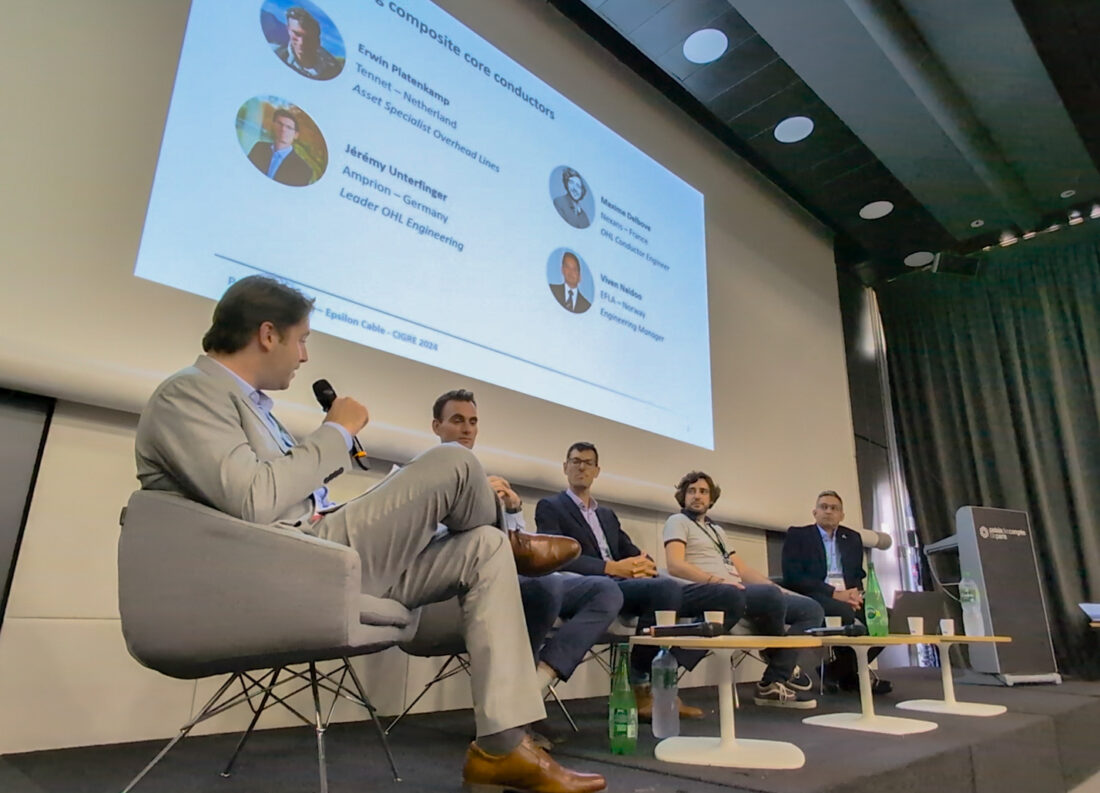
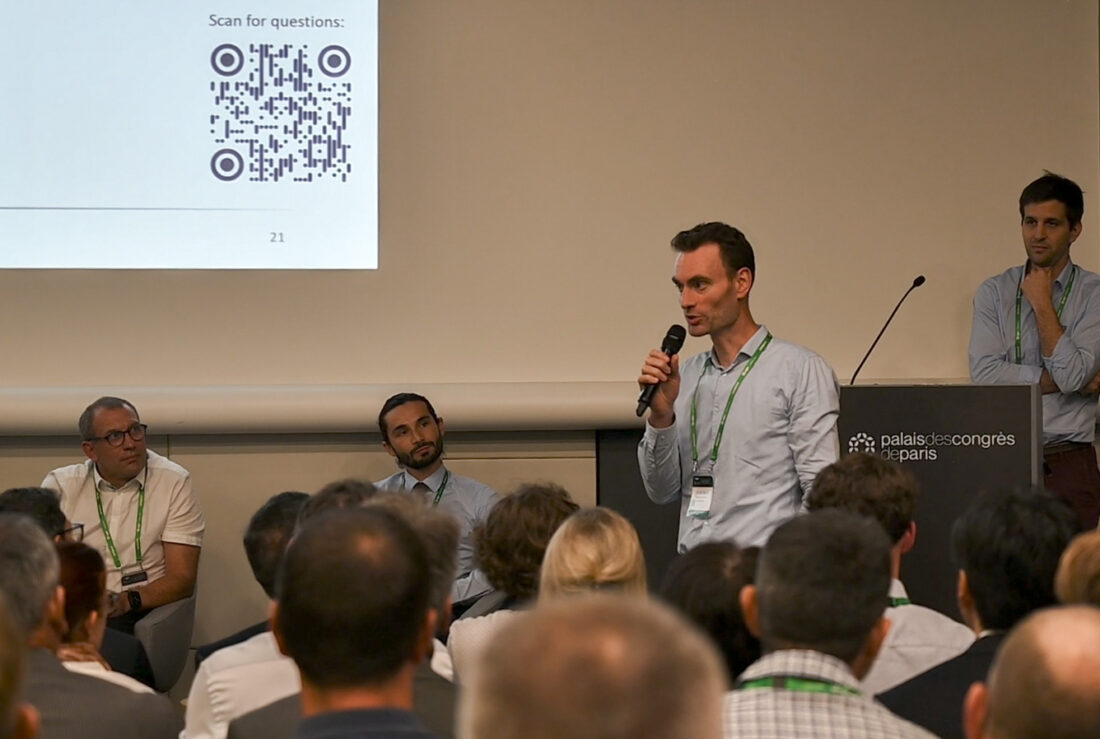
During the last CIGRE Paris Session, Epsilon Cable organized a panel discussion bringing together experts from utilities, engineering firms and manufacturers to exchange insights on composite core conductors. The event was fully booked, with around one hundred CIGRE delegates and guests, showing the strong interest this topic generates within the transmission community.
The first expert panel focused on line design using composite core conductors and featured:
- Erwin Platenkamp (TenneT)
- Jérémy Unterfinger (Amprion GmbH)
- Maxime Delbove (Nexans)
- Vivendra Naidoo (EFLA Consulting Engineers)
The session was moderated by Joseph Sylvia from Epsilon Composite.
Let’s begin this series with TenneT, which has extensive experience with composite core conductors and an ambitious plan to deploy them further across its powergrid in the Netherlands.
TenneT’s Speaker: Erwin Platenkamp – Overhead Lines Asset Specialist
TenneT’s experience with composite core conductors
Joseph Sylvia: Erwin could you tell us a little bit about TenneT’s activities and assets?
Erwin: TenneT is a transmission system operator (TSO) in the Netherlands and parts of Germany, and one of the four major TSOs in Germany. We supply electricity to about 45 million consumers, making us one of Europe’s largest TSOs.
Our network spans 25,000 km of transmission lines, roughly half in the Netherlands and half in Germany. This division exists because TenneT Germany operates only 220 kV and 380 kV lines, while in the Netherlands we also manage 110 kV and 150 kV lines.
What are your current plan and what are the main challenges you are currently facing?
We have a roadmap for the energy transition, aiming to shift to renewable energy production by 2045. We expect electricity production to double or even triple, and its share in overall energy consumption will rise significantly driven largely by offshore wind parks.
Integrating all this into our grid is a huge challenge. Over the next ten years, we need to build more than 300 km of new double-circuit lines in the Netherlands and reconductor about 600 km of existing lines, adding complexity to the task.
How are composite core conductors addressing some of these challenges that you see arising?
The biggest challenge is building new lines, as finding corridors in a densely populated country like the Netherlands is extremely difficult. From planning to realization, a new overhead line currently takes about 15 years. Reconductoring existing lines is faster and easier, so we’re focusing on upgrading the main part of the 380 kV and 220 kV network in the Netherlands. About 10 years ago, we identified carbon core technology with annealed aluminum as the best solution for reconductoring. This technology offers excellent sag performance under load, is lightweight and strong, reducing stress on towers and foundations, and delivers outstanding conductivity.
Are line loss considerations important on your transmission lines?
Absolutely. We design lines for a minimum lifespan of 50 years, so reducing losses has significant financial and environmental benefits. For every conductor type, not just HTLS, we specify conductivity requirements. In reconductoring projects, we often choose slightly larger conductors, even when smaller ones could meet ampacity needs. Larger conductors help reduce losses while keeping structural impact minimal. For all standard and HTLS conductors, we set conductivity targets and incentivize suppliers to exceed them, ensuring TenneT gets high-performance conductors that meet all criteria.