


- Home
- > Expert Insight
- > Conductor design
- > Designing new overhead lines with composite-core conductors: what CIGRE TB 983 changes
Designing new overhead lines with composite-core conductors: what CIGRE TB 983 changes
CIGRE Technical Brochure 983, Use of high temperature conductors in new overhead lines, brings a useful discussion into the design of new overhead transmission lines.
While the brochure covers high-temperature conductors in general, we will focus here on composite-core conductors.
Until now, High Temperature Low Sag (HTLS) composite-core conductors have mainly been discussed in the context of reconductoring. The objective was usually to increase the ampacity of an existing overhead line without rebuilding towers, opening a new corridor or carrying out extensive civil works.
TB 983 extends this reasoning to new overhead line design.
This does not make composite-core conductors the default choice for new lines. A transmission line remains a project-specific compromise between ampacity, sag, clearances, mechanical loading, losses, installation practices, maintenance, environmental constraints and total cost.
The useful contribution of TB 983 is to provide a framework for assessing when high-temperature conductors can be considered from the earliest stages of a project, instead of being treated only as a solution for existing assets.
From late-stage conductor choice to design-stage assessment
A transmission line is designed for several decades of operation. The assumptions used at the design stage are becoming harder to stabilize.
Future power flows may be affected by renewable generation, hydroelectric evacuation schemes, interconnections, industrial demand, grid reinforcement programmes or N-1 operating constraints. In many regions, a line built today may have to operate under conditions that differ significantly from the initial load scenarios.
In this context, conductor selection cannot be reduced to a late procurement decision based on rated current and purchase price. The conductor can affect capacity margins, sag behaviour, clearances, tower geometry, span optimization, electrical losses and life cycle cost.
This is where TB 983 is useful for line designers. It encourages them to assess the conductor as part of the overall line design, alongside structures, foundations, right-of-way, installation methods and operating conditions.
What HTLS composite-core conductors can bring to new lines
HTLS conductors are designed to operate at higher temperatures while limiting sag. On existing lines, this often makes it possible to increase capacity without necessarily modifying the supporting structures.
For new lines, the assessment is different. The question is not only how much current the conductor can carry but whether additional thermal capability and lower sag can improve the design of the line as a whole.
This may be relevant when future flows are uncertain, when right-of-way is difficult to obtain, when clearances are critical, when tower height has a major impact on cost or acceptability, or when capacity margins are valuable for peak or contingency conditions.
The assessment still has to remain project-specific, as high-temperature conductors do not replace proper line design. Electrical performance, corona effects, audible noise, electric and magnetic fields, mechanical loading, wind, ice, vibration, fittings, installation methods and maintenance practices all remain part of the engineering work.
For greenfield projects, the relevant question is therefore “which conductor gives the best result once the technical, economic and operational constraints of the line are considered together”.
Composite-core conductors in the CIGRE Type 4 classification
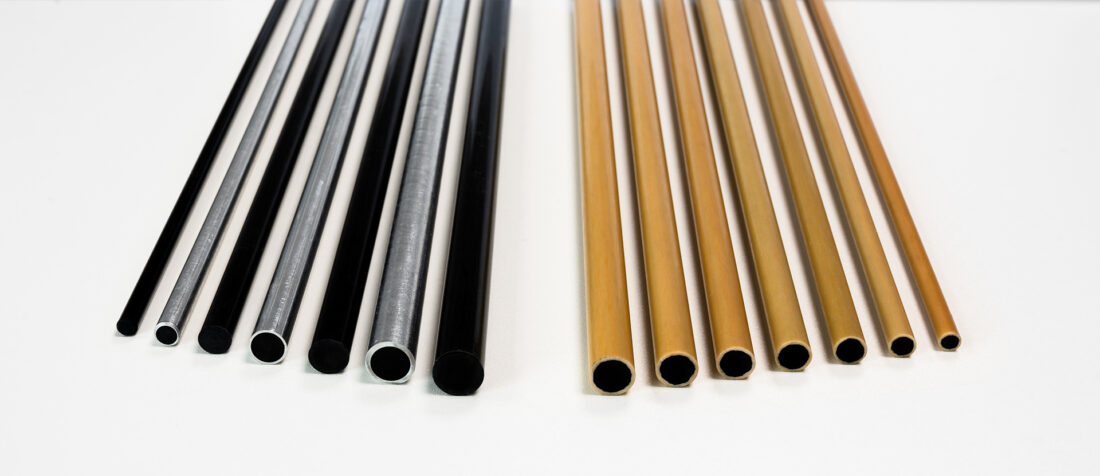
Within the CIGRE classification, Type 4 HTLS conductors use a polymer matrix composite core as the mechanical strength member, combined with aluminium strands for electrical conduction.
HVCRC® conductors belong to this family.
The interest of this architecture comes from the combination of several properties: low thermal expansion of the composite core, favourable strength-to-weight ratio, controlled sag at elevated temperature and, depending on the design, the possibility to increase the share of conductive aluminium while keeping mass and diameter within the project limits.
TB 983 also discusses low-weight conductor concepts, where conductor design is used to reduce mechanical loading while preserving the required electrical performance of the line. This is another relevant design-stage perspective, because the conductor is not assessed only through its ampacity or maximum operating temperature, but also through its effect on tower loading, span design, clearances and structural cost.
Composite-core architectures can contribute to this logic when the objective is to reduce conductor weight, control sag or optimize the balance between mechanical strength, aluminium section and overall diameter.
Epsilon Cable has already contributed to this approach through a low-weight conductor project developed with Nexans for German TSO Amprion, showing that composite cores are not limited to high-temperature reconductoring applications and can also be used as a design lever for new or optimized overhead line configurations.
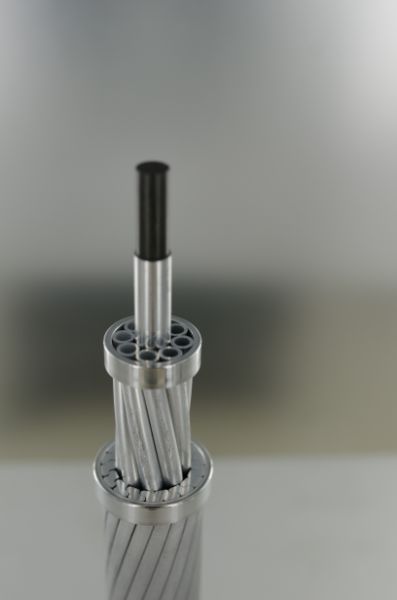
For line designers, the value of a composite core lies in its effect on the complete line design: capacity, sag, clearances, structure height, losses, installation requirements, fittings and life cycle cost.
The assessment should therefore cover practical engineering questions. What additional capacity does the conductor provide? What clearances does it help maintain? Can it reduce tower height or avoid reinforcement? What is the impact on electrical losses? Which fittings and installation procedures are required? How does it affect the total cost of the line over its operating life?
This is a more useful discussion than a simple comparison of conductor performance figures.
Looking beyond conductor purchase cost
One of the important points in TB 983 is that the cost of a conductor cannot be evaluated in isolation, but based on the total cost and value of the line.
In a new line, the conductor influences several other cost drivers: tower height, foundations, span design, clearances, right-of-way, electrical losses, installation methods and sometimes the future ability of the asset to absorb higher flows.
A conductor that is more expensive per km can still be economically relevant if it reduces other project costs, improves the performance of the line or lowers operating losses. However, this reasoning only works if the conductor premium remains compatible with the savings generated elsewhere in the line design.

This is why lower-cost composite-core architectures such as HVCRC LITE can be particularly relevant for new-line projects where the objective is sag and structural optimization rather than maximum thermal rating.
HVCRC LITE is a composite-core conductor designed for projects where the economic and structural benefits of a composite core are useful, but where the high-temperature capability of an HTLS conductor is not required and where conductor cost is a primary constraint.
TB 983 also gives a useful economic reference point in that regard: based on the cases reviewed in the brochure, the benefits associated with lower towers, narrower right-of-way and reduced losses justify a conductor cost approximately 30 to 50 percent higher than that of a conventional conductor, which is within the range where HVCRC LITE is positioned.
PIRECT in Cameroon: a new-line application of composite-core conductors
The PIRECT project in Cameroon, led by SONATREL, illustrates this reasoning in the context of a new transmission infrastructure.
As part of the RIS-RIN interconnection programme, the project aims to establish the connection between the Southern and Northern grids of the country and to support the evacuation and export of power generated by the Nachtigal hydropower plant.
In this context, HVCRC® composite-core conductors have been selected for a new 225 kV transmission line. Epsilon Cable qualified the HVCRC technology and supplied the composite core to its Indian partner Transrail, which acted as the strander and EPC contractor for the project..
The use of composite-core conductors was relevant for this project because it was integrated into the design of a new line where power transfer capacity, long-term grid reinforcement, infrastructure development, operational robustness and project cost all need to be addressed together.
According to the project design rationale, the selected conductor solution also helps reach the required capacity with a 225 kV line instead of moving to a 400 kV alternative which would have implied much higher costs and right-of-way constraints.
This example should not be read as a general rule for all new lines since each project has its own electrical, mechanical, economic and environmental constraints, but it shows that composite-core conductors are not limited to the reinforcement of existing assets, and in specific cases can be part of the initial design strategy for new infrastructure.

What changes in the engineering discussion
CIGRE TB 983 is useful because it moves part of the discussion upstream.
For new overhead lines, conductor selection should not be limited to ampacity and conductor price. It should also consider sag, clearances, structures, losses, installation, maintenance, right-of-way, CAPEX, operating cost and long-term grid flexibility.
This is particularly important for networks facing uncertain future flows, limited corridors and long permitting timelines. In these situations, the conductor can influence key design choices instead of being selected only after the main infrastructure decisions have already been made.
A rigorous evaluation remains essential on a case-by-case basis, because HTLS and composite-core conductors are not universal solutions, and their relevance depends on the specific constraints and economics of each project.
The main change brought by TB 983 is therefore not a new technical claim but a broader design question: when future capacity, sag control and infrastructure optimization matter, conductor selection should be assessed early enough to influence the line design.

About the Author, Alexandre LULL
Alexandre is Managing Director of Epsilon Composite. After studying composite materials, aerospace engineering and business management, he began his career in the Airbus group, before joining Epsilon Composite. He is closely involved in the activities of Epsilon Cable to support the modernisation of electrical infrastructures. As a leader, Alexandre is focused on developing the company’s global performance, integrating extra-financial criteria and sustainable development into its strategy.